












September is National Recovery Month.
For some people, that might mean very little, for others, it represents something incredibly
personal. I am one of those people.
I have been sober for more than three decades, and sobriety has given me a life I could never
have imagined when I first stopped drinking!
But after all these years, there is something that still surprises me: There is still so much
stigma around alcoholism, addiction and recovery.

We celebrate someone who quits smoking.
We applaud someone who changes their diet after a health scare.
We admire someone who recognizes that something in their life isn’t working and has the
courage to change it.
But say, “I’m an alcoholic and I don’t drink anymore,” and sometimes the room changes.
Why?
Alcoholism Doesn’t Always Look Like What You Think It Does
I think one reason the stigma remains is that many of us still carry an image of what an
“alcoholic” looks like.
Someone who has lost everything.
Someone drinking out of a paper bag.
Someone who can’t hold a job or maintain a family.
Certainly, those stories exist! But so do many others.

Alcoholism can exist in beautiful homes.
It can exist in successful careers.
It can exist in good marriages and loving families.
It can exist in someone who looks completely put together from the outside.
And sometimes the person struggling doesn’t even recognize it themselves because they keep
thinking:
“I’m not that bad.”
Maybe that’s the wrong question.
Maybe a better question is:
“What is alcohol costing me?”
My peace?
My relationships?
My integrity?
My health?
My ability to be fully present?
My self-respect?
You don’t have to lose everything before you’re allowed to decide you’ve lost enough.
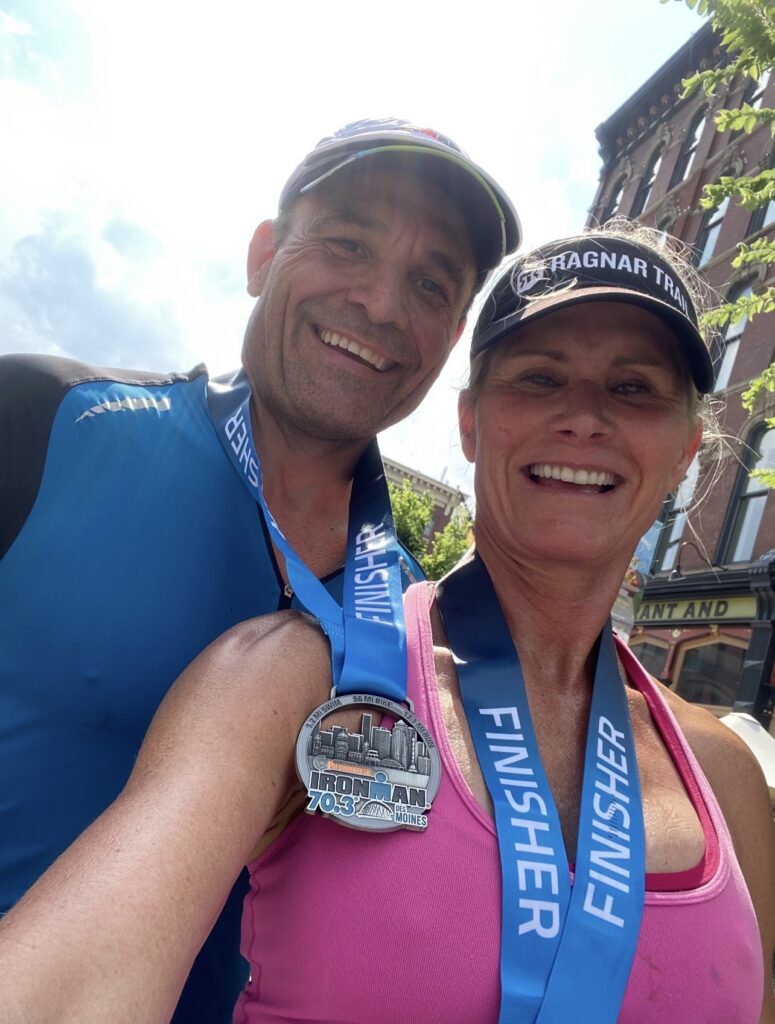
And Getting Sober Isn’t a Character Flaw
This is something I wish more people understood.
Admitting that you have a problem with alcohol isn’t an admission that you’re weak.
Think about what recovery actually asks of a person:
It asks you to become honest when you’d rather hide.
It asks you to ask for help when you’d rather handle things yourself.
It asks you to look at your behavior and take responsibility for it.
It asks you to make amends when you’ve hurt people.
It asks you to change.
And then it asks you to keep doing those things — one day at a time — for the rest of your life.
There is nothing weak about that.

Sobriety Isn’t About Giving Something Up
Before I got sober, I probably would have thought sobriety meant losing something.
No drinking.
No parties.
No fun.
No escape.
What I couldn’t understand then was everything I was going to gain.
Sobriety gave me clarity.
It gave me relationships.
It gave me the ability to show up.
It gave me the opportunity to become someone I could trust.
It gave me a community.
And eventually, it gave me the privilege of helping other people find their way too.
That’s one of the most beautiful things about recovery.
What once felt like the worst thing about you can eventually become something you use
to help somebody else.

We Need to Make It Easier to Say, “I Need Help”
Stigma has consequences.
If someone believes admitting a drinking problem will make people see them as weak,
irresponsible, damaged or somehow “less than,” why would we be surprised when they hide it?
We don’t need more shame around addiction.
There’s usually plenty of that already.
We need more conversations where someone can say:
“I think I have a problem.”
And hear:
“Okay. Let’s figure out what comes next.”
We need people in long-term recovery willing to talk about it.
Not because everyone needs to share their story publicly. They don’t. But because every time
someone sees a person they respect — a parent, friend, coworker, business leader, athlete,
neighbor — living a full life in recovery, another stereotype starts to fall apart.

If You’re Wondering About Your Own Drinking
You don’t have to decide today whether you’re an alcoholic.
You don’t have to compare your story to anyone else’s.
And you don’t have to wait for some catastrophic “rock bottom.”
You can simply get curious.
Is alcohol making my life better or smaller?
And if you don’t like the answer, talk to someone. Ask for help. Go to a meeting. Talk to
someone in recovery.Take one small step.
Because one of the things I know after all these years is this:
There is an extraordinary amount of life on the other side of asking for help.

So, during Recovery Month, yes, let’s celebrate the people who are sober.
Let’s celebrate one day.
Thirty days.
One year.
Thirty years.
All of it matters.
But let’s also do something else; Let’s change the way we talk about the people who are
still struggling.
Less judgment.
Less whispering.
Less “What’s wrong with them?”
And a little more:
“What happened, and how can we help?”
Because recovery shouldn’t be something people are embarrassed to talk about.
For many of us, it’s one of the things we’re most grateful for.
And maybe someone reading this right now needs to know:
Getting sober isn’t the end of your life.
Sometimes it’s when your life finally begins.
YOU MATTER


Thank you for sharing your story and helping others. Addiction does not discriminate and we need to help and not judge. Congratulations to you on all your hard work and continued sobriety. Truly amazing!
Thank you for replying Jennifer. Erin is truly amazing and such a fabulous human being.